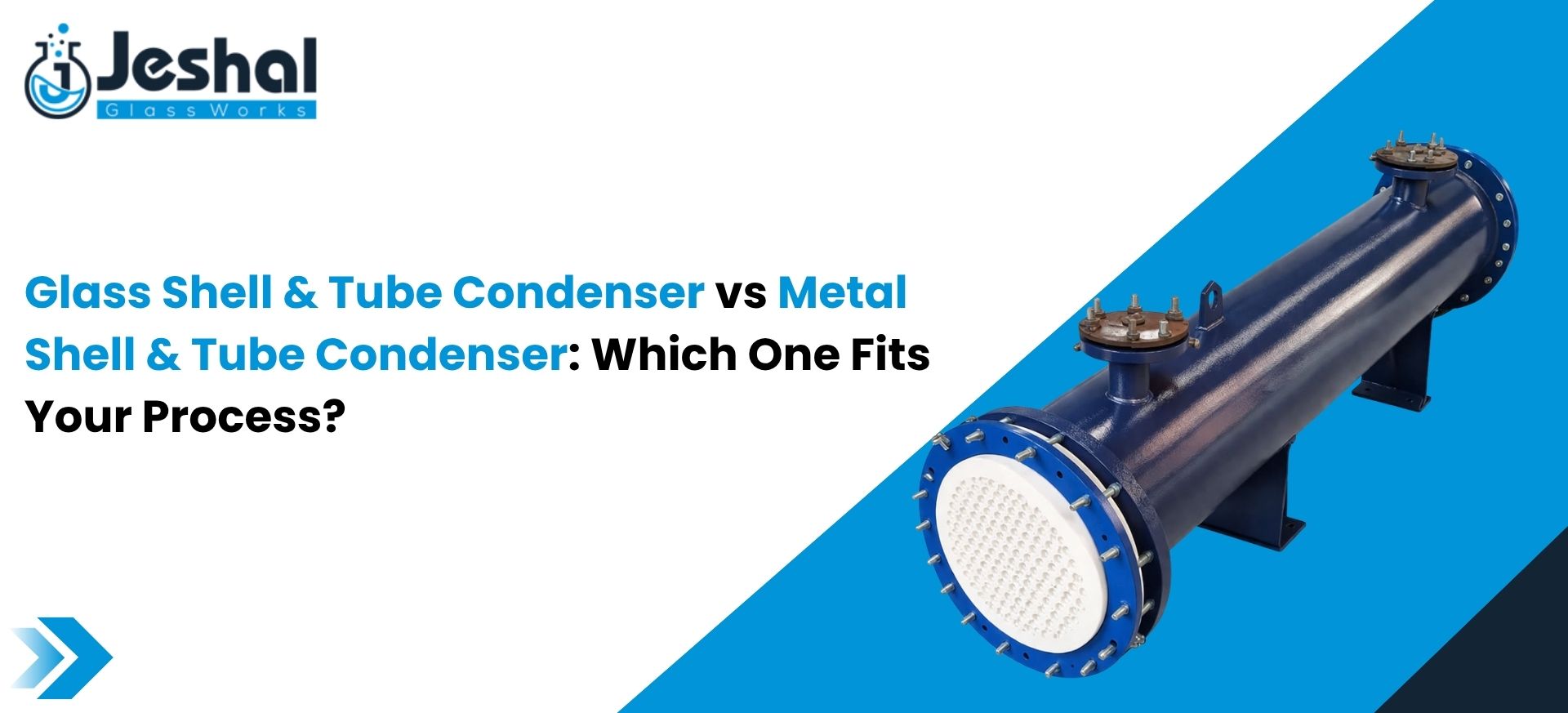
Choosing the right condenser is an important decision in pharmaceutical, API, chemical, specialty chemical, and research applications. A condenser must efficiently remove heat, condense vapours, withstand the process environment, and remain compatible with the chemicals being handled.
Two commonly considered options are glass shell and tube condensers and metal shell and tube condensers. While both use heat exchange principles, their material properties can make one more suitable than the other depending on the process.
For applications involving corrosive chemicals, process visibility, and pharmaceutical or laboratory requirements, glass can offer specific advantages. Metal condensers, meanwhile, can be appropriate where mechanical strength, pressure requirements, or process conditions favour metallic construction.
This guide compares both options to help process engineers and procurement teams make a more informed decision.
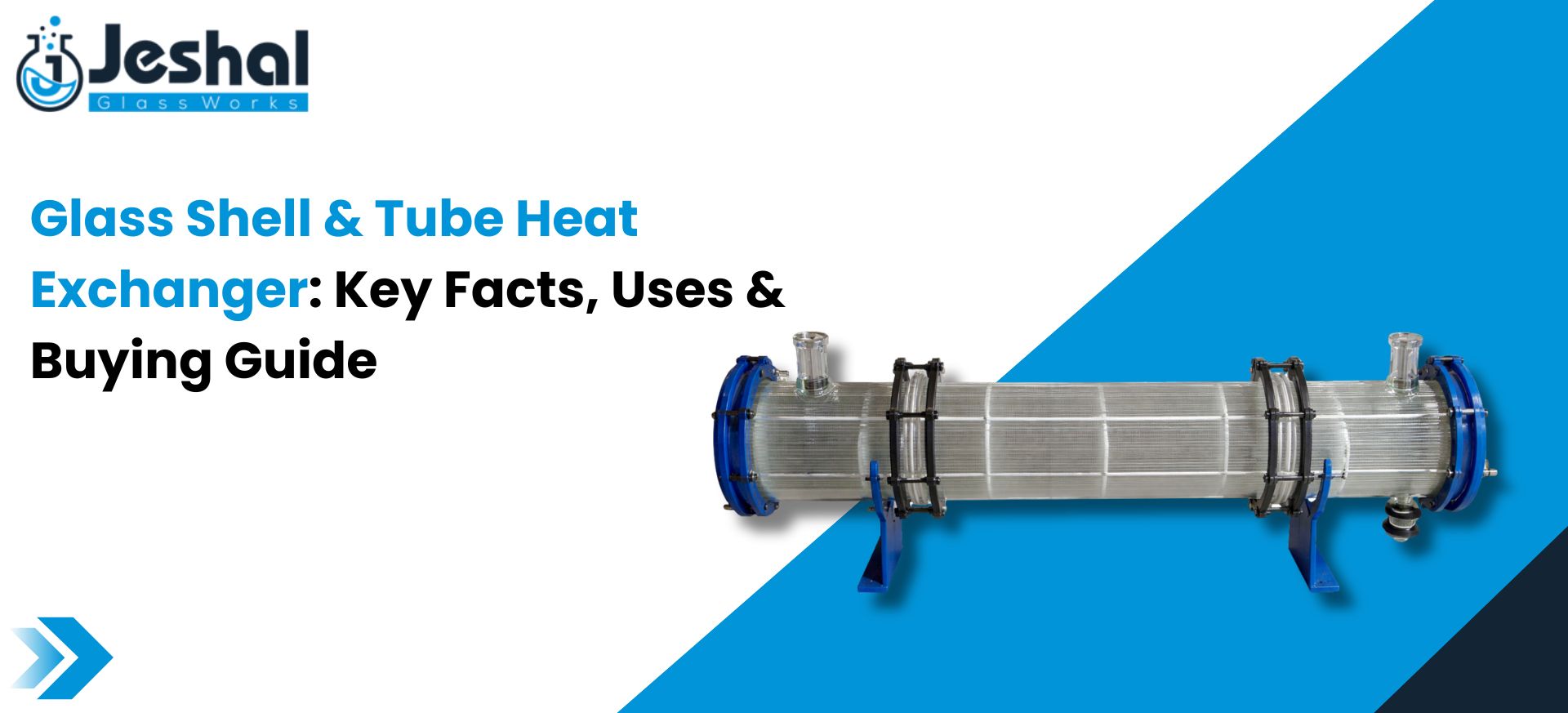
A shell and tube condenser is a heat-exchange device designed to cool vapours and convert them into liquid. In a typical configuration, one fluid flows through tubes while another cooling medium flows through the shell side.
During operation, heat moves from the hot vapour or process fluid to the cooler medium. Once the vapour reaches its condensation temperature, it changes from gas to liquid.
Shell and tube condensers are widely used for:
The appropriate condenser material depends heavily on the chemical, temperature, pressure, flow rate, and required heat-transfer performance.
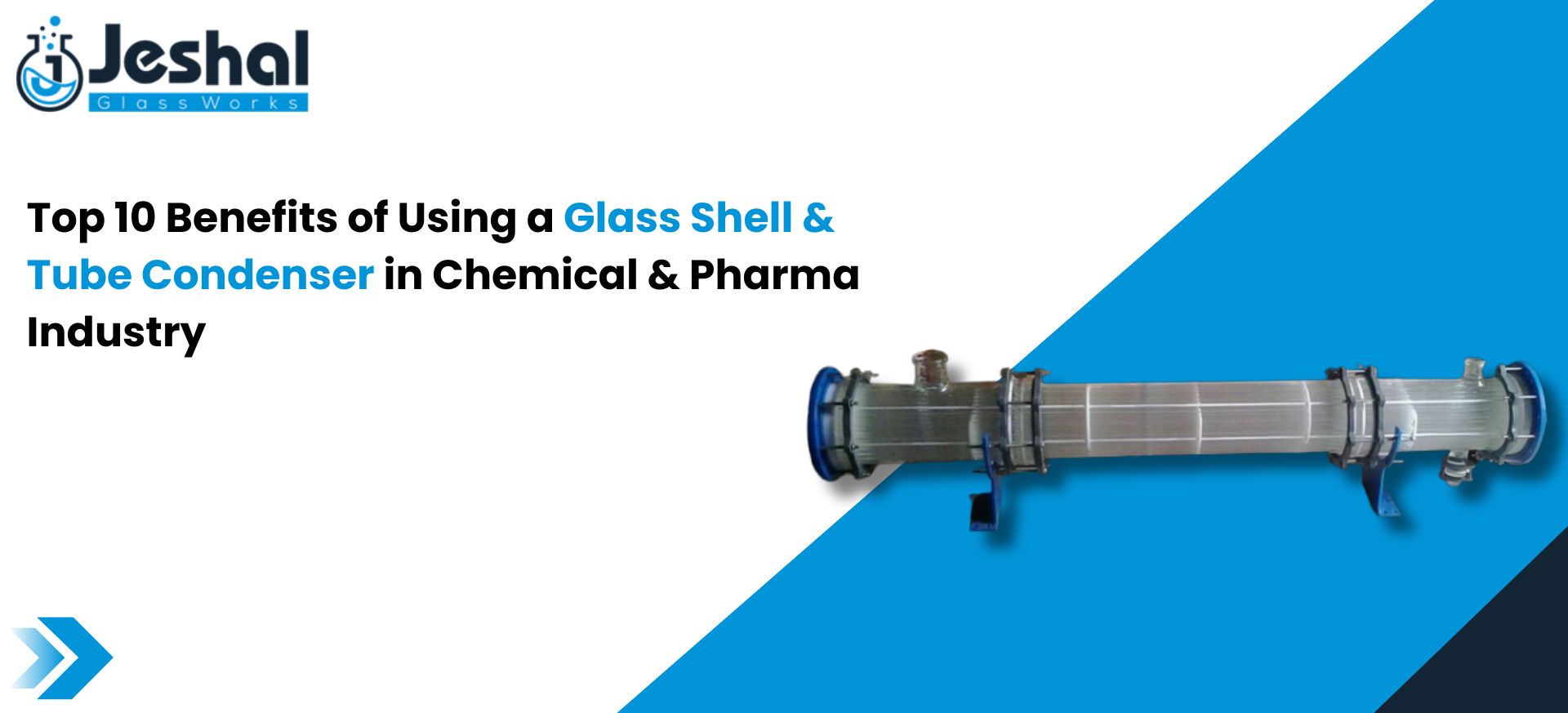
A glass shell and tube condenser is a shell-and-tube heat exchanger constructed with suitable glass components, commonly borosilicate glass in process applications.
One of its major advantages is chemical compatibility. Glass can provide good resistance to many chemicals and is therefore useful in applications where corrosion is a concern.
Another practical benefit is process visibility. Depending on the design, transparent glass construction allows operators to observe condensation and flow conditions more easily than opaque metal equipment.
Glass shell and tube condensers can be particularly useful in pharmaceutical, chemical, specialty chemical, and R&D environments where cleanliness, chemical resistance, and visual monitoring are important.
A metal shell and tube condenser uses metallic materials such as stainless steel or other alloys selected according to the process.
Metal condensers are widely used in industrial applications because metals can provide high mechanical strength and can be engineered for demanding operating conditions.
The appropriate metal should be selected based on factors such as:
Metal construction can be advantageous when mechanical robustness and specific pressure or temperature requirements are primary considerations.
The right choice depends on the application rather than one material being universally better.
| Factor | Glass Shell & Tube Condenser | Metal Shell & Tube Condenser |
|---|---|---|
| Chemical resistance | Good for many chemical applications | Depends strongly on metal/alloy |
| Process visibility | Major advantage due to transparency | Generally opaque |
| Corrosion concerns | Useful where glass is chemically compatible | Alloy selection is important |
| Mechanical strength | More susceptible to physical damage | Generally high |
| Cleaning | Smooth glass surfaces can be advantageous | Depends on construction and finish |
| Process monitoring | Easier visual observation | Usually requires instrumentation |
| Pressure requirements | Must follow design limitations | Can be suitable for higher-pressure designs |
| Pharmaceutical applications | Useful for compatible processes | Also widely used |
| R&D/process development | Highly useful for visual monitoring | Useful depending on process |
| Customization | Can be configured for specific glass-process systems | Available in many industrial configurations |
The final selection should always be based on the actual process conditions and equipment design.
Chemical compatibility is one of the most important considerations when selecting a condenser.
In corrosive processes, the wrong construction material can result in degradation, contamination, maintenance issues, or reduced equipment life. Glass can be advantageous in many applications because it is resistant to a wide range of chemicals.
However, glass is not universally resistant to every chemical. The specific process fluid, concentration, temperature, and exposure conditions should always be evaluated before selecting the material.
Metal condensers can also provide excellent corrosion resistance when an appropriate alloy is selected. Stainless steels and specialized alloys are used for different process environments.
Therefore, material selection should be based on chemical compatibility rather than simply choosing glass or metal.
Both glass and metal shell and tube condensers can be designed for effective heat transfer.
Metal generally has higher thermal conductivity than glass, which can be beneficial when heat-transfer performance is the dominant design consideration. However, overall condenser performance depends on much more than material conductivity.
Important factors include:
A properly designed glass condenser can therefore be an effective choice for applications where chemical compatibility and process visibility are more important than maximizing thermal conductivity alone.
One of the clearest advantages of glass equipment is visual process monitoring.
With transparent components, operators may be able to observe vapour condensation, liquid flow, buildup, and other process conditions. This can be particularly helpful during R&D, process development, troubleshooting, and scale-up activities.
Glass also has a smooth surface that can be advantageous for cleaning in suitable applications.
Metal equipment, being opaque, generally requires instruments or process indicators to monitor internal conditions. However, metal construction can offer advantages where physical robustness and demanding industrial service conditions are required.
Glass and metal condensers can both be found across industrial applications.
Condensers may be used for distillation, solvent recovery, purification, and process development. Glass can be particularly useful where chemical compatibility and process observation are important.
The selection depends on the chemicals involved, operating conditions, required heat-transfer area, and corrosion considerations.
Customized condenser systems can support process development and production applications involving specific solvents and chemical mixtures.
Glass condensers can be valuable in pilot-scale and laboratory environments because their transparency makes process observation easier.
Before selecting a shell and tube condenser supplier, consider these questions:
For pharmaceutical and chemical applications, the condenser should be selected as part of the complete process system rather than as an isolated component.
Jeshal Glass Works provides glass process equipment and customized solutions for pharmaceutical, API, chemical, specialty chemical, and R&D applications.
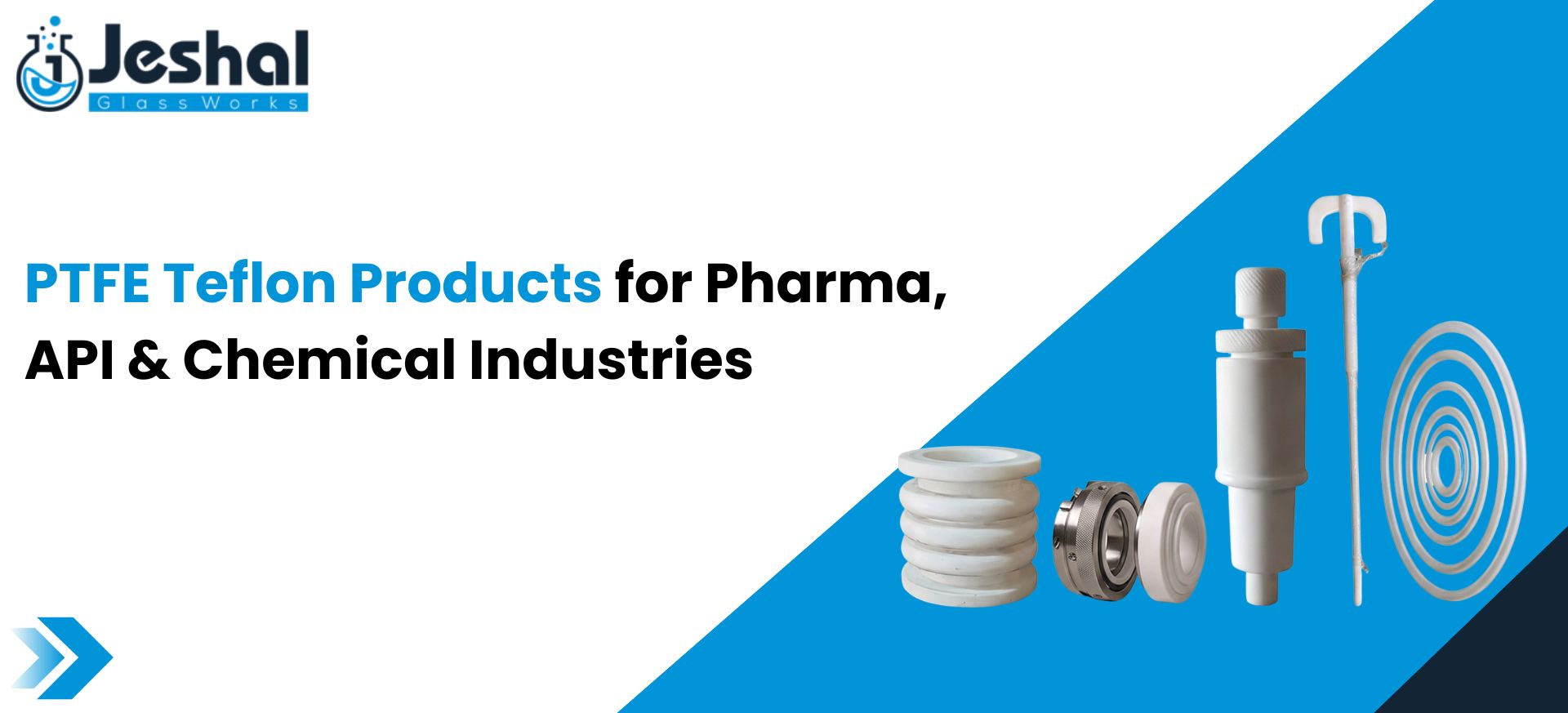
The company's product range includes Shell & Tube Condensers, Condensers, Industrial Glass Process Systems, Glass Pilot Plant Assemblies, Glass Accessories Parts, and PTFE / Teflon Products.
For customers evaluating a glass shell and tube condenser, the right configuration can be discussed according to the process requirements, equipment connections, application, and operating conditions.
This application-focused approach helps customers select a condenser that fits their existing equipment and process objectives.
So, which is better: a glass shell and tube condenser or a metal shell and tube condenser?
There is no universal answer. A glass condenser can be an excellent choice when chemical compatibility, process visibility, cleanliness, and integration with glass process equipment are priorities. A metal condenser may be more appropriate when mechanical strength, specific pressure requirements, or particular heat-transfer requirements dominate the application.
The best choice depends on your process chemistry, temperature, pressure, flow rate, cooling requirements, and equipment configuration.
Looking for the right condenser for your pharma, API, or chemical process? Contact Jeshal Glass Works to discuss your application and request a customized condenser solution.
A glass shell and tube condenser is a heat-exchange device using glass components to cool and condense vapours. It is commonly considered for compatible pharmaceutical, chemical, pilot-plant, and R&D applications.
Not necessarily. Glass can offer advantages in chemical compatibility and process visibility, while metal can provide high mechanical strength. The best option depends on the process conditions.
Glass condensers can be useful because of their chemical resistance, transparency, and compatibility with many glass process systems.
Consider the process fluid, chemical compatibility, temperature, pressure, flow rate, cooling medium, heat-transfer requirements, dimensions, connections, and maintenance requirements.
Yes. Condenser configurations can be selected or customized according to application requirements, equipment connections, process conditions, and required heat-transfer performance.
Shell and tube condensers are used in pharmaceutical, API, chemical, specialty chemical, petrochemical, R&D, and other process industries.